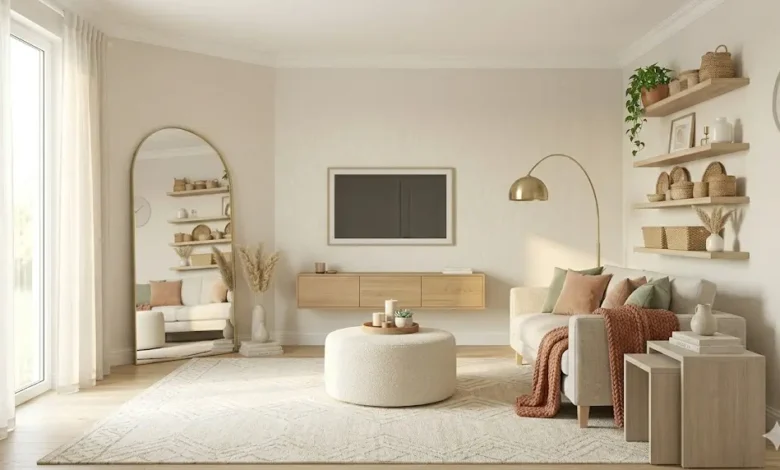
Two years ago, I moved into a 380-square-foot apartment in Denver. The living room? Barely 11 × 13 feet. I shoved in a big sectional I’d been holding onto, piled throw pillows everywhere, and told myself it would “work itself out.”
It did not work itself out.
Every time I walked in, I felt the walls closing in. Guests would sit down and immediately look uncomfortable — not because the couch wasn’t cozy, but because the room felt like a cave. That’s when I started digging into every trick, technique, and design principle I could find. What I discovered completely changed how I think about small spaces.
Spoiler: the problem almost never is the size of the room. It’s the decisions made inside it.
1. The Layout Rule Nobody Talks About
Before you buy a single piece of furniture or pick a paint color, you need to get your layout right. This is where most people go wrong — and it costs absolutely nothing to fix.
The classic mistake? Pushing all your furniture against the walls. It feels logical — more floor space, right? But it actually makes a room feel smaller and more institutional, like a doctor’s waiting room.
“Floating your furniture — even just 3 to 6 inches off the walls — creates depth and makes the room feel intentionally designed.”
Here’s what actually works in a small living room:
- Place your sofa perpendicular to the longest wall, not flush against it
- Create a clear “conversation zone” — furniture no more than 8 feet apart
- Leave at least 18 inches of walkway between pieces (24 inches is ideal)
- Anchor the seating area with a rug to define the space visually
- Face seating toward a focal point: fireplace, window, or TV — never a blank wall
💡 Pro Tip: Use painter’s tape on the floor to map out furniture placement before you buy anything. Tape the exact footprint of a sofa, coffee table, and chairs. Walk around it. You’ll save yourself hours of heavy lifting and expensive returns.
2. Paint Colors That Actually Open Up a Room
You’ve heard “paint it white.” And yes, white works. But it’s not the only answer — and sometimes it’s not even the best one. Here’s what the science and a lot of trial and error actually says about color in small rooms.
The Light Reflectance Value (LRV) Game
Every paint color has an LRV score from 0 (pure black) to 100 (pure white). For a small living room, you want colors with an LRV of 65 or higher. Here are specific recommendations that go well beyond builder-grade white:
| Color Name | Brand | LRV | Vibe |
|---|---|---|---|
| Chantilly Lace | Benjamin Moore | 92 | Crisp, clean, timeless |
| White Dove | Benjamin Moore | 85 | Slightly warm, not stark |
| Swiss Coffee | Sherwin-Williams | 83 | Warm white, cozy undertones |
| Pale Oak | Benjamin Moore | 69 | Soft beige, very livable |
| Agreeable Gray | Sherwin-Williams | 60 | Warm greige, ultra-versatile |
If you’re feeling bold, try a tonal approach: paint walls, trim, and ceiling within two shades of each other. This removes the visual “breaks” that chop up a small room. It’s one of the most effective tricks high-end designers use in tight spaces — and it costs nothing extra.
3. Furniture That Works Hard for Small Spaces
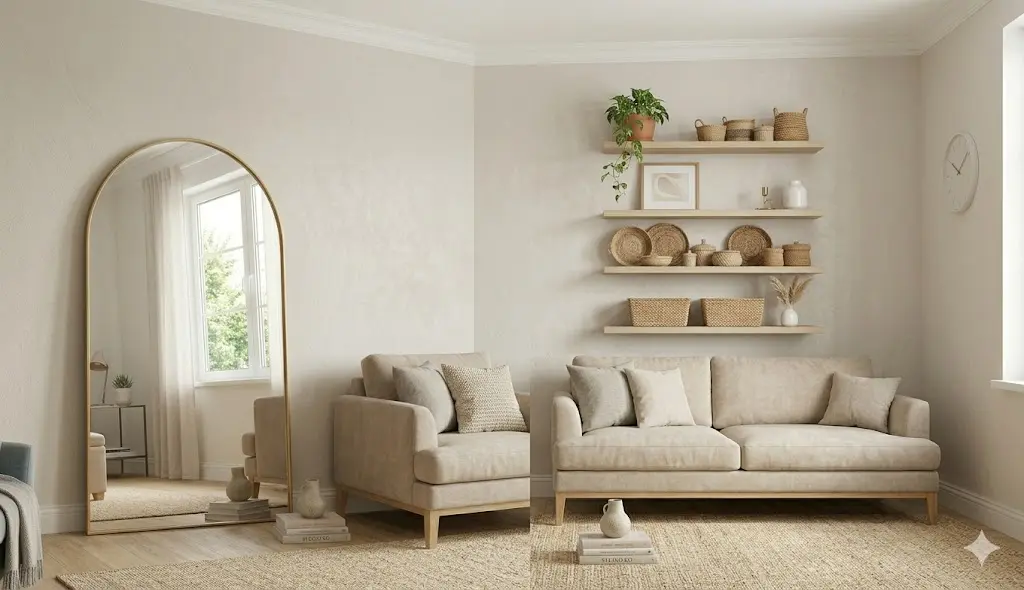
Here’s a counterintuitive truth: one large sofa often looks better in a small living room than multiple small pieces crammed together. The key is choosing furniture with the right profile and purpose.
The Low-Profile Rule
Furniture with low backs and visible legs creates the illusion of more floor space. When you can see the floor underneath a sofa or chair, the room breathes. Look for sofas in the 72–84 inch range with a back height under 32 inches and tapered wood or metal legs.
For a clean, open feel, check out this mid-century apartment sofa with exposed wood legs on Amazon — the visible legs and low silhouette do exactly what a small room needs.
Multi-Function Furniture Is Non-Negotiable
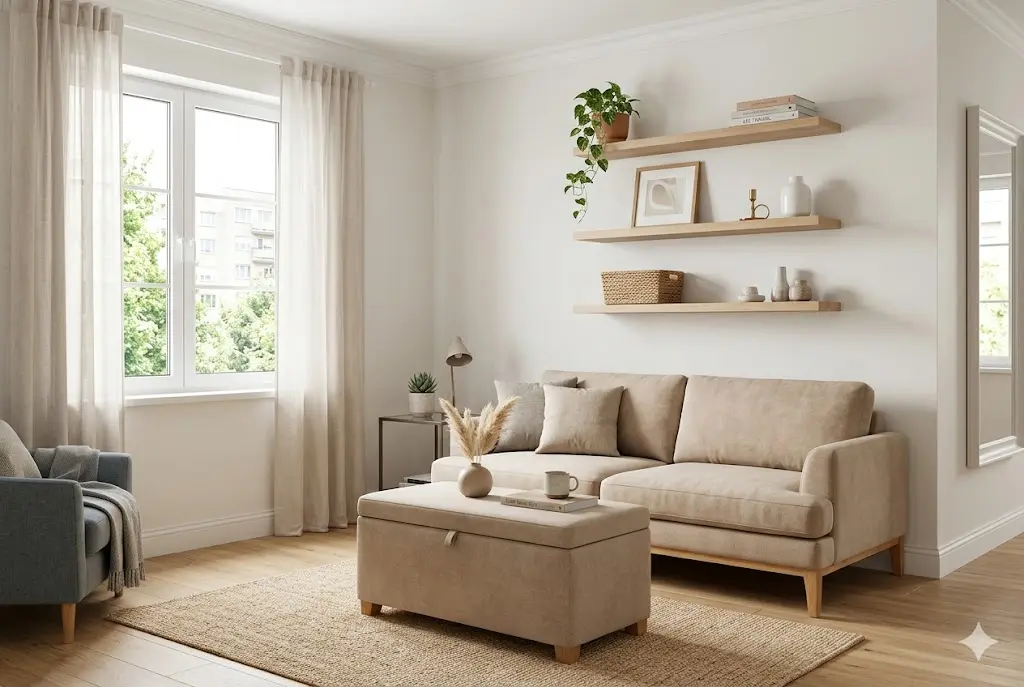
- Storage ottoman — replaces the coffee table, adds seating, hides blankets. Upholster in Bouclé or performance linen for a current, tactile look
- Nesting tables — use them when needed, tuck them away when not
- Slim console table behind the sofa — acts as a room divider in open-plan spaces without blocking light
- Floating shelves instead of a bulky bookcase — same storage, far less visual weight
- Media console with closed doors — keeps cords and clutter invisible
This storage ottoman in performance linen on Wayfair checks every box: storage, extra seat, and coffee table in one footprint.
📐 Sizing Spec: In a living room under 150 sq ft, keep your coffee table at no wider than 48 inches and no deeper than 24 inches. Height should be 16–18 inches — comfortable from a standard 17-inch sofa seat height. Anything larger becomes an obstacle course.
4. Lighting: The Most Underrated Space Expander
Most small living rooms have one overhead light. One. And it makes the room feel exactly like what it is — a box with a single bulb in it. Layered lighting is what separates a room that looks designed from one that just looks inhabited.
Layer 1 — Ambient (the overall glow)
Replace your harsh overhead with a warm white bulb at exactly 2700K color temperature. This is the sweet spot: warm enough to feel cozy, bright enough to function. Aim for 150–200 lumens per square foot total for a living room.
Layer 2 — Task (functional brightness)
A floor lamp next to your reading chair does two things: provides functional light AND draws the eye upward, making ceilings feel higher. Choose a lamp 58–64 inches tall with a shade that directs light both up and down. This arc floor lamp in brushed brass on Amazon swings light over the seating area without needing a side table.
Layer 3 — Accent (the magic layer)
- LED strip lights behind the TV at 2700K — reduces eye strain and makes the wall recede visually
- A small table lamp on a bookshelf or console for a warm evening glow
- Picture lights over artwork — draws attention to the walls and makes the room feel curated
- Dimmer switches on every fixture — game changer for under $15 each
💡 Specific Recommendation: Use Philips Hue White Ambiance bulbs in your lamps. Dropping to 2200K in the evening creates a dramatically cozier feel — and the dimming function means you can tailor the mood without buying multiple fixtures.
5. The Mirror Trick — Done Right, Not Done Cliché
Yes, mirrors make rooms look bigger. But not every mirror in every position works. Here’s the nuance most people miss:
- Position beats size. A mirror placed to reflect a window doubles the apparent light and depth. A mirror reflecting a blank wall does almost nothing
- Mount at eye level — center at 57–60 inches from the floor. Too high and it only shows the ceiling
- Lean it. A large leaner mirror (72+ inches) against the wall looks effortless and modern — and skips the wall anchor entirely
- One statement piece beats a cluster of small mirrors every time — a single 36×48 inch mirror looks more intentional and spacious
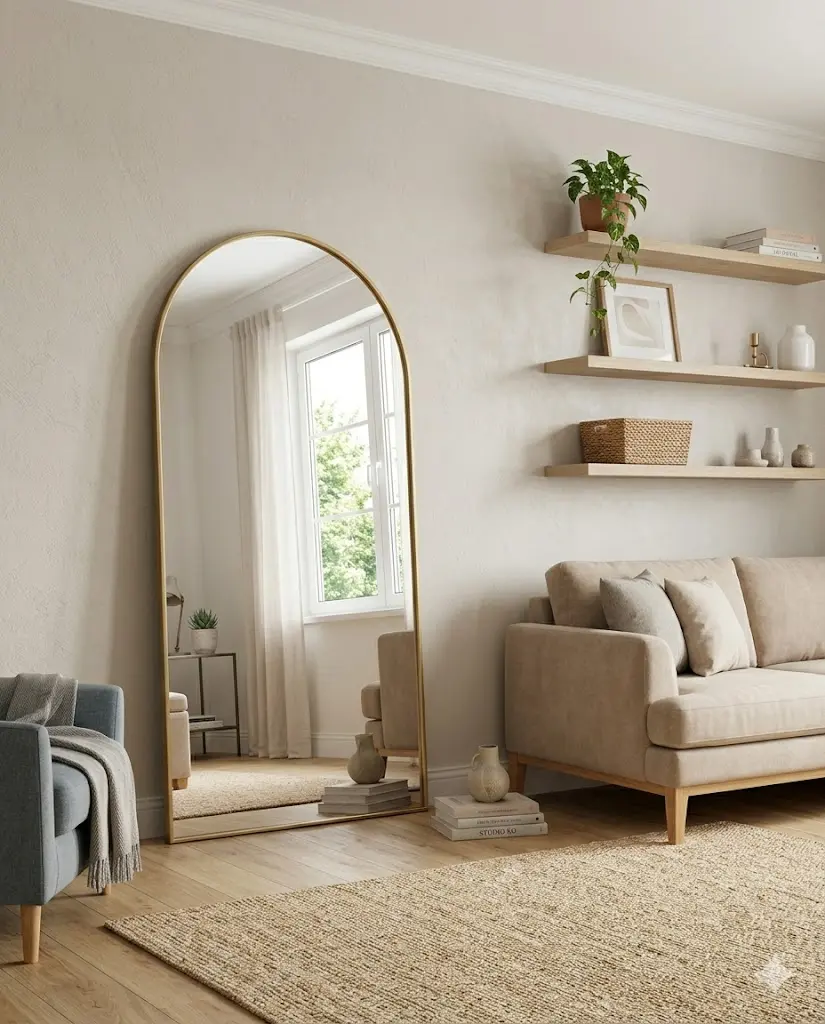
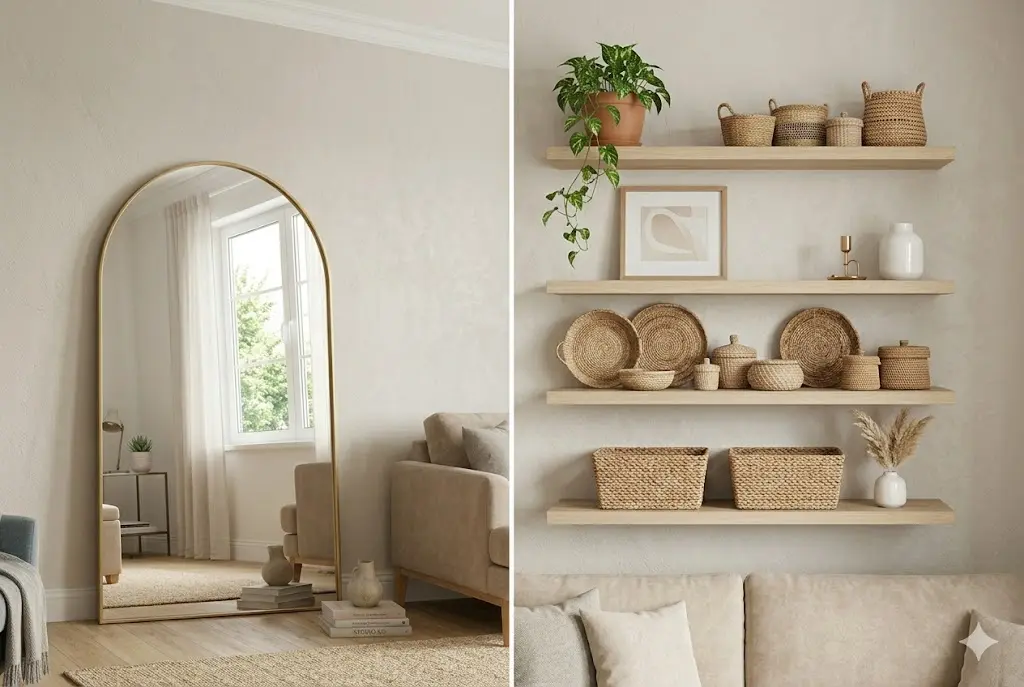
The arched mirror is having a major moment right now — and for good reason. The curved top breaks the boxy feeling of a small room. Check out this large arch mirror with brushed gold frame on Amazon.
6. Go Vertical — Your Wall Space Is Wasted Potential
When floor space is limited, the only direction to grow is up. Vertical design choices pull the eye upward, making ceilings feel higher and the room feel larger overall.
Curtains: One Wrong Move Shrinks the Room
Single most impactful change you can make: hang curtains 4–6 inches from the ceiling, not from the window frame. Use panels that are at least 96 inches long — even with 8-foot ceilings. The extra length makes your ceilings look taller, full stop.
Stick to linen, cotton voile, or light polyester blends that filter light. Avoid heavy blackout drapes unless you have an extreme sun problem — they’re room-shrinkers in disguise.
Floating Shelves: The Designer Secret Weapon
Instead of a floor-to-ceiling bookcase eating into your square footage, install 3–4 floating shelves stacked vertically with 12–14 inches between each shelf. Style them with a mix of books, one plant, and two to three small objects — not crammed. The negative space between objects is part of the design.
These LACK floating shelves from IKEA are a reliable starting point. Pair with black or brass brackets for an elevated look.
7. Rug Sizing — The #1 Mistake People Make
A 5×7 rug under a full sofa and chairs looks like a postage stamp. It chops the room into tiny disconnected pieces rather than unifying the space. Here’s the actual rule:
- Living room under 150 sq ft → 8×10 rug minimum
- 150–250 sq ft → 9×12 or larger
- All front legs of sofa and chairs should sit on the rug
- Leave 8–12 inches of bare floor between rug edge and wall — this framing effect actually enlarges the room visually
| Material | Best For | Maintenance | Cost |
|---|---|---|---|
| Wool | Longevity, warmth, texture | Vacuum weekly | $$$ |
| Polypropylene | Pets, kids, high traffic | Easy spot-clean | $ |
| Jute / Sisal | Natural, organic look | Avoid moisture | $$ |
| Cotton flatweave | Layering, casual spaces | Machine washable | $ |
Light-colored rugs with subtle geometric or abstract designs work best in small rooms. This 8×10 cream geometric low-pile area rug on Amazon balances visual interest without overwhelming a tight space.
Wall Art for Living Room in New York: Transforming City Spaces with Style
8. Storage Without the Clutter Look
The fastest way to make a small living room feel cramped? Visual clutter. The fastest fix? Strategic storage that hides things without adding bulk.
The 80/20 Shelf Rule
Keep 80% of your shelving filled, 20% empty. The open space isn’t wasted — it’s doing design work. It lets the eye rest and makes displayed items feel intentional rather than hoarded.
- Ottoman with storage — remotes, chargers, and blankets disappear inside
- Media console with closed doors — electronics and cords completely out of sight
- Uniform baskets on lower shelves — linen, seagrass, or woven cotton; tidy look while hiding miscellaneous items
- Wall-mounted magazine ledges — keeps books off the floor
- Tray on the coffee table — corrals remotes, candles, and clutter into one intentional grouping
🌿 Finishing Touch: Add one medium-sized plant — a Pothos, Snake Plant, or Fiddle Leaf Fig — in a solid ceramic pot at floor level. One well-chosen plant beats five small succulents for visual impact. Plants add organic softness that no piece of furniture can replicate.
The Weekend Checklist: 10 Changes That Cost Almost Nothing
- Move your sofa 4 inches away from the wall — just try it for a week
- Swap your overhead bulb for a 2700K warm LED at 800 lumens
- Add a floor lamp next to the sofa — plug-in, no electrician needed
- Hang curtains from ceiling height, not from the window frame
- Place a mirror opposite your largest window
- Remove one piece of furniture that’s “just there” — less is genuinely more
- Add a tray to your coffee table to corral remotes and random objects
- Swap a small dark rug for a light-colored 8×10
- Add one tall plant in the corner — minimum 3 feet
- Paint trim and ceiling the same color as the walls for an instant expansive effect
Frequently Asked Questions
What colors make a small living room look bigger?
Light warm neutrals with an LRV of 65 or higher work best. Top picks: Benjamin Moore Chantilly Lace (LRV 92), White Dove (LRV 85), and Pale Oak (LRV 69). Avoid cool grays — they feel sterile and closed-in. Warmth is the key: warm whites and warm beiges feel simultaneously cozy and spacious.
What size sofa works in a small living room?
For rooms under 150 sq ft, look for a sofa between 72–84 inches wide with a back height under 32 inches and exposed legs. Avoid sectionals with chaise extensions unless your room is at least 12 feet wide in that direction.
How do I arrange a small living room with a TV?
Mount the TV on the wall — never use a floor-standing unit if you can avoid it. Position your sofa so viewers sit between 1.5× and 2.5× the TV’s diagonal measurement away from the screen. For a 55-inch TV, that’s roughly 7–9 feet. Use a slim floating media console beneath it instead of a bulky entertainment center.
What rug size do I need for a small living room?
For most small living rooms under 200 sq ft, an 8×10 is the minimum. All front legs of your sofa and chairs should be on the rug, and there should be 8–12 inches of bare floor between the rug edge and the walls. A 5×7 in a typical seating arrangement makes the room feel smaller, not larger.
Can dark furniture work in a small living room?
Yes — if done intentionally. One dark anchor piece (a deep navy velvet sofa, a walnut wood coffee table) against light walls reads bold and sophisticated, not heavy. What doesn’t work is multiple dark pieces competing in the same tight space. One dark statement, light everything else.
Sources & Further Reading:
Architectural Digest — Small Living Room Design Ideas · HGTV — Making the Most of a Small Living Room · Better Homes & Gardens — Small Living Room Ideas

